
The Brain Behind the Mask: What NHL Goalies, NFL Quarterbacks, and MLB Pitchers Share That Nobody in Sport Psychology Is Talking About
The Image I Cannot Forget
He was sitting in the training room with an IV in one arm and a beer in the other hand.
Not because he was careless. Not because he did not take his craft seriously. This man had played at the highest level of professional hockey for over a decade. He understood his body with a precision that most sports scientists would envy.
He also understood his brain — which is precisely why he could explain, in clinical detail, exactly what was happening in his neurochemistry before, during, and after a game.
He knew about dopamine. He knew about the crash. He knew that what he had been chasing for years — the hit, the save, the impossible stop that makes sixty thousand people lose their minds — was not just athletic achievement.
It was neurochemical.
“I know what I am doing,” he told me, gesturing at the beer with the same hand that had stopped pucks traveling over 100 miles per hour for the better part of two decades. “I know exactly what I am doing.”
He had ADHD. He had always had ADHD. And he had spent his entire career deploying it with a precision that most sports performance programs would not have known how to measure — let alone design for.
What I learned from him, and from the research that has since confirmed what he described in that training room, has changed how I think about elite performance positions in every major sport.

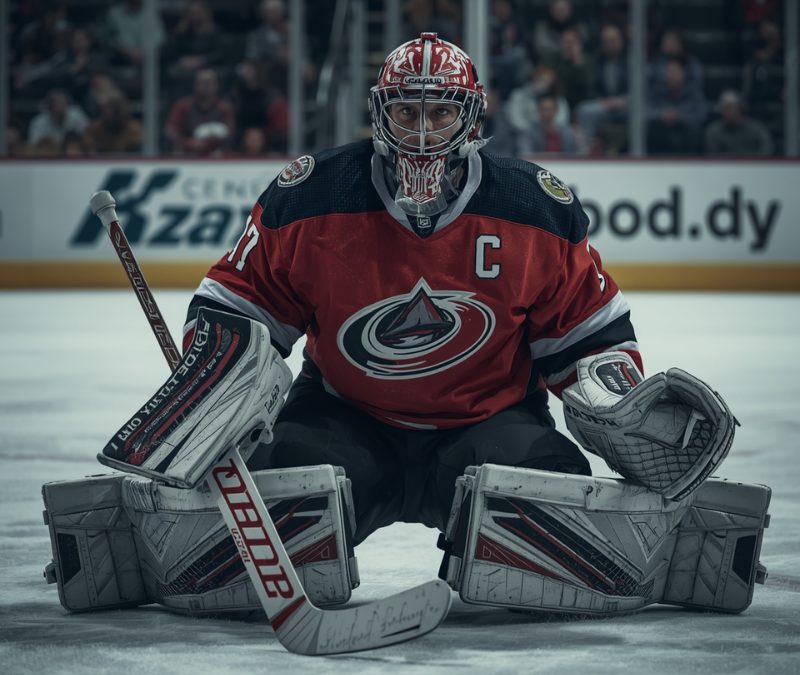
He was calm in the crease because his brain demanded it. He was restless outside it for the same reason. Understanding the neuroscience behind elite position performance changes everything about how these athletes are trained, supported, and sustained. SimoneFortier.com
Position Is Not Random. It Is Neurological.
Here is what most sports psychology has missed.
The position an athlete gravitates toward — and thrives in — is not purely a function of physical attributes. It is not simply about size, speed, or reflexes, though all of those matter.
It is significantly neurological.
The brain chemistry that makes a person extraordinary in one position makes them genuinely ill-suited for another. And at the elite level, where the physical differences between athletes are often marginal, the neurological differences between positions are where the real performance architecture lives.
A landmark 2025 study published in the Open Access Journal of Sports Medicine — the most comprehensive neurophysiological evaluation of position-specific brain function in elite hockey ever conducted — measured brain vital signs in 348 elite Junior-A hockey players using the NeuroCatch portable brain scanner during the 2022-2023 season.
The findings were precise and significant.
- Forwards showed significantly faster sensory N100 latency — faster auditory processing — than defensemen
- Goalies showed significantly higher P300 amplitude compared to all other positions
The P300 is a neurophysiological marker of attentional resource allocation — the brain’s measurable investment of focused attention in processing a specific stimulus. A higher amplitude P300 means the brain is deploying more attentional resources, more precisely, in the moment of response.
Goalies showed the strongest attentional focus of any position tested. Not the fastest processing. Not the most reactive. The most precisely focused. That distinction points directly to the neurochemical architecture that separates the people who play these positions from everyone else.
The Poliquin Framework: Your Brain Chemistry Determines Your Position
Charles Poliquin spent decades training over 800 Olympic athletes and elite performers across twenty different sports. What he understood — and what the research increasingly confirms — is that neurotransmitter dominance is not incidental to athletic performance. It is foundational to it.
Poliquin built his training protocols around neurotype profiling, rooted in the Braverman Assessment — a validated neurological evaluation that identifies a person’s dominant neurotransmitter architecture. Four primary profiles define athletic performance:
Dopamine-dominant
Explosive, novelty-seeking, intensity-driven. These athletes thrive on variation, high stakes, and immediate consequence. They are gifted for power sports requiring explosiveness and perform best when the environment is unpredictable and the outcome is immediate.
Acetylcholine-dominant
Outstanding attention span, complex pattern integration, strategic adaptability. In a baseball team, 11 out of 12 players are acetylcholine dominant. They read the game. They anticipate. They process multiple streams of information simultaneously without losing thread.
GABA-dominant
The most misunderstood profile in modern sports psychology. GABA — gamma-aminobutyric acid — is the brain’s primary inhibitory neurotransmitter. Where dopamine accelerates and drives, GABA regulates, dampens, and stabilizes. Poliquin noted that GABA dominant individuals would make perfect snipers since they seem to be gifted with infinite patience.
In team sports? They make extraordinary goalies. Extraordinary quarterbacks. Extraordinary pitchers.
Serotonin-dominant
Content, consistent, endurance-oriented — valuable in entirely different athletic contexts.
The critical insight is this: the positions that carry the highest consequence per individual action in their sport are disproportionately occupied by athletes with specific neurochemical profiles. And those profiles are not identical. They are in creative, dynamic tension.
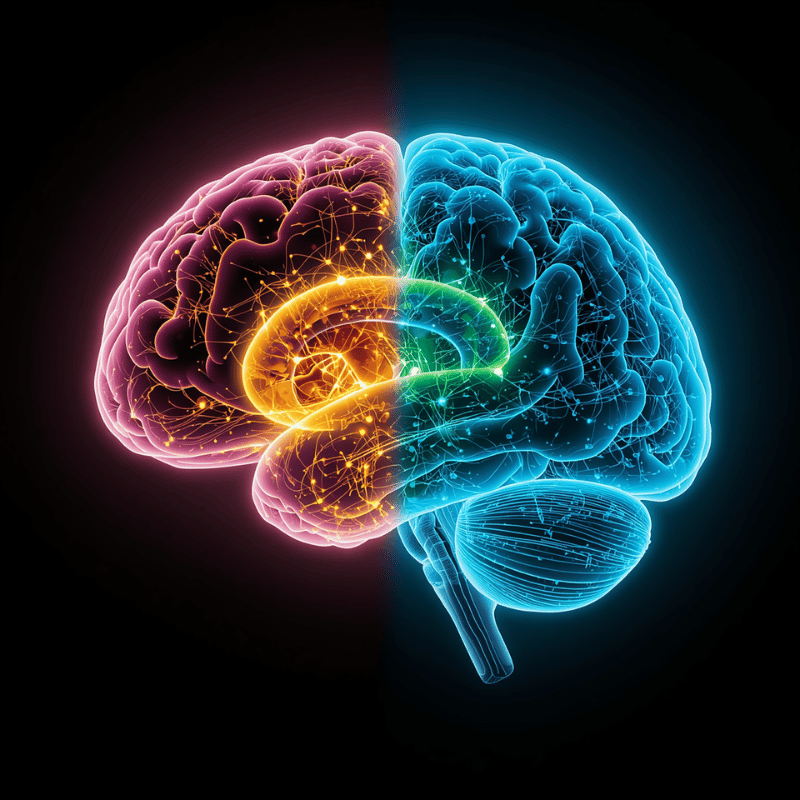
Elite position performance is not the absence of intensity. It is the precise regulation of it. GABA does not make a goalie indifferent. It makes him present. SimoneFortier.com
The Goalie Brain: GABA Architecture Meets Dopamine Hunger
Here is the paradox that my NHL goalie understood about himself better than most sports scientists have articulated in the literature.
Goalies require GABA-dominant characteristics to perform their position.
The ability to remain calm while sixty thousand people are screaming and a vulcanized rubber disc is traveling toward you at over 100 miles per hour is not a personality achievement. It is a neurochemical one. The capacity to sustain focused attention through chaos — to not over-activate, to not flood, to remain precisely calibrated across sixty minutes of high-consequence pressure — requires a nervous system capable of significant inhibitory regulation.
An NHL goalie has to access a deep place of calm, sustain focused attention, and regulate emotional reactions without breaks. No other position in professional sport demands this combination at this intensity, for this duration, with this consequence attached to each individual error.
The 2025 NeuroCatch data confirms the neurophysiological signature of this capacity: goalies deploy attentional resources with a P300 amplitude measurably superior to every other position on the ice.
But here is where the story gets more interesting.
Many of the goalies I have worked with — and the one sitting across from me with a beer and an IV — did not fit the calm, regulated, GABA-dominant profile outside the crease.
Off the ice? Novelty-seeking. Intensity-driven. Restless in the absence of consequence. Often managing the dopamine crash that followed the game-night neurochemical flood in ways that would surprise anyone who had only watched them perform.
This is not contradiction. This is a sophisticated neurological adaptation. A brain that is dopamine-hungry can learn to deploy GABA-dominant regulation as a performance strategy in the specific high-stakes environment that provides the dopamine hit it needs. The crease is the dopamine source. The calm within it is the GABA-trained response. The chaos outside it is the system seeking its next activation.
ADHD and the Goalie Position: The Research Nobody Expected
The intersection of ADHD and elite goaltending is not accidental.
The dopaminergic architecture of ADHD — specifically the reward circuitry’s orientation toward high-stimulation, high-consequence, high-novelty environments — creates a specific type of brain that becomes extraordinarily alive in exactly one scenario: when everything is on the line and the next action is the only thing that exists.
Research on ADHD in athletic populations consistently shows that some symptoms reflect autoregulatory efforts to reach neurological stability by increasing external stimulation — hyperactivity and sensation seeking as self-regulation strategies.
The crease, at game pace, in a tight third period, is one of the most effective ADHD autoregulation environments ever designed. Not by intention — by neurological accident of sport.
The ADHD brain, which struggles to sustain attention on low-stimulation tasks, which seeks novelty and urgency as dopamine triggers, which performs brilliantly under consequence and fades in its absence — that brain, deployed inside sixty feet of ice with a net behind it and the game on the line, is operating precisely as its neurochemistry was designed to.
This is not despite the ADHD. This is because of it.
Sensation seeking is a personality trait with high heritability estimates of 40 to 60 percent, concerned with motivation for intense, unusual, and unpredictable sensory experiences. The goalie who gets sharper as the game gets tighter, who makes the impossible save when the consequence is at its highest, is running a neurological program that most conventional performance coaching has no framework to understand.

Different sports. Different equipment. Same neurological architecture. The GABA-dopamine tension that makes extraordinary performance possible in the crease is the same system running under centre. SimoneFortier.com
The Quarterback Brain: Pattern Recognition at Neurological Speed
The NFL quarterback is the most cognitively demanding position in American team sport.
In the 0.4 seconds between snap and throw decision, a quarterback must process: defensive formation, coverage rotation, receiver routes, blocking assignments, spatial geometry, opponent tendency, and the mechanics of delivery — all simultaneously, all without conscious deliberation.
This is not thinking. This is pattern recognition operating at neurological speed.
The acetylcholine-dominant brain — characterized by extraordinary attention span, complex pattern integration, and the capacity to hold multiple streams of information simultaneously without losing thread — is the neurological architecture that makes this possible.
Dr. Daniel Amen’s SPECT imaging research on high-performing executive function brains documents the signature of this profile: high prefrontal coherence, strong anterior cingulate modulation, and the capacity to sustain complex attentional processing under pressure without the system degrading.
But the elite quarterback is not running on acetylcholine alone. Research by Colin DeYoung at the University of Minnesota established that dopamine is centrally involved in achievement striving, creativity, and the willingness to take calculated risk. The quarterback who throws into a window that exists for 0.2 seconds — who trusts the pattern read over the conservative option — is also running a dopamine-mediated risk calculation inside an acetylcholine-dominant processing system.
The elite quarterback is a hybrid neurotype. And the ones who sustain performance across a full season — across a career — are managing both systems with a precision that most performance programs are only beginning to understand.
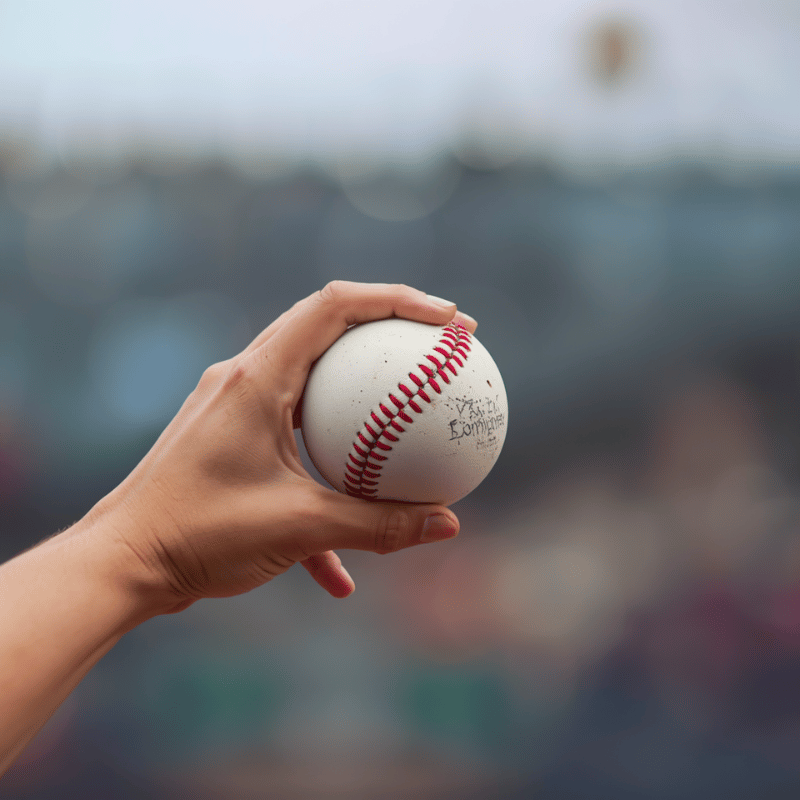
he pitcher who throws the backdoor slider on a 3-2 count in Game 7 is not thinking about the stakes. His nervous system has narrowed the entire world to one point of contact. That is not composure. That is neurobiology. SimoneFortier.com
The Pitcher Brain: GABA Mastery in Plain Sight
The pitcher faces the same batter repeatedly. He knows the count, the situation, the inning, the score, and precisely what the next pitch needs to do. And he has to execute it with a margin of error measured in fractions of an inch while forty thousand people watch.
Elite pitching requires what sports science calls the “quiet eye” — the capacity to maintain precise, stable visual fixation on the target immediately before and during execution of the motor sequence. Research from the University of Calgary documented that hockey goalies with the quiet eye have a better chance of making big saves — and the same principle governs elite pitching.
The quiet eye is a GABA phenomenon. It is the nervous system’s capacity to suppress irrelevant input, inhibit distraction, and maintain precise attentional focus on a single, critical target at the moment of execution.
The pitcher who throws a backdoor slider on a 3-2 count with the bases loaded in Game 7 is not thinking about the situation. He is inside a neurological state of such precise inhibitory regulation that the forty thousand people, the stakes, the career implications — none of it enters the execution loop.
GABA has not made him indifferent. It has made him present.
Where the goalie’s GABA system manages chaos by staying calm within it, the pitcher’s GABA system manages consequence by narrowing the entire perceptual world to one point of contact between fingertip, seam, and the catcher’s glove.
The Nutrition Architecture These Brains Cannot Afford to Ignore
Here is what elite sport has not adequately addressed. The neurochemical profiles that create extraordinary performance in these positions are also the profiles most vulnerable to specific nutritional deficiencies — and the performance costs are significant and largely invisible until decline is already measurable.
GABA Precursors — Vitamin B6 and Magnesium
GABA is synthesized from glutamate through the enzyme glutamic acid decarboxylase, which requires Vitamin B6 as a cofactor. B6 deficiency directly impairs GABA synthesis — and in a high-stress, high-performance nervous system, B6 depletion accelerates under demand. Magnesium modulates GABA receptor sensitivity, and magnesium deficiency produces exactly the hyperreactivity, anxiety, and sleep disruption that degrades the sustained calm regulation these positions depend on.
Dopamine Precursors — Tyrosine and Phenylalanine
The dopamine hunger that drives sensation-seeking in these athletes — the same drive that makes them extraordinary in high-consequence moments — requires consistent nutritional support. A 2015 study in Neuropsychologia demonstrated that tyrosine supplementation improved cognitive flexibility and working memory in tasks dependent on prefrontal dopamine function. An athlete crashing neurochemically post-game is partially experiencing precursor depletion — not just a psychological state.
Omega-3 Fatty Acids — DHA
DHA is the primary structural component of the prefrontal cortex — the region governing precise pattern recognition under pressure that defines elite performance in all three of these positions. A 2018 meta-analysis in Neuropsychopharmacology documented measurable improvements in attention and impulse regulation following omega-3 supplementation. For brains operating at this level of attentional demand, DHA is structural maintenance, not supplementation.
Zinc
A cofactor in both dopamine regulation and GABA function simultaneously — zinc sits at the precise intersection of both neurochemical systems these athletes depend on. Zinc deficiency has been consistently associated in peer-reviewed research with increased impulsivity, emotional dysregulation, and reduced stress tolerance. For an athlete managing the neurological demands of an NHL crease, an NFL pocket, or a World Series mound, zinc depletion is a performance variable.
What the brain is fed determines what the brain is capable of sustaining. At this level, that is not a wellness preference. It is a performance architecture decision.
What Mastery Actually Looks Like in These Positions
My goalie with the beer and the IV was not self-destructing.
He was self-aware in a way that most performance systems had never given him the framework to fully articulate or strategically support. He knew his dopamine system crashed after games. He knew the calm he deployed in the crease was a trained neurological state built on top of a brain that was fundamentally oriented toward stimulation and consequence. He knew the beer was a primitive version of what a more sophisticated neurological recovery protocol could provide.
What he did not have — what most elite athletes in these positions do not have — is the nutritional, neurological, and systemic support architecture that would allow them to sustain that performance with less physiological cost.
- The goalie showing attentional inconsistency at 32 is not declining because of age. He is declining because the neurochemical substrate that powered his performance has been depleted without adequate systemic support.
- The quarterback who cannot access fourth-quarter regulation is not experiencing a mental weakness. He is experiencing a nervous system that was never adequately resourced for the demand being placed on it.
- The pitcher who loses command in high-leverage situations — who had it reliably for three seasons and then gradually stopped — is not losing mechanics. He is losing the GABA-mediated inhibitory regulation that precise execution depends on.
These are not performance psychology problems. They are neurological architecture problems. And they have neurological architecture solutions.
Series Positioning Note
Recommended placement: Bridge piece between Blog 1 (Classic ADHD) and Blog 2 (Inattentive ADHD).
After Blog 1 establishes that Classic ADHD is a dopamine architecture difference operating as an asset in high-consequence environments, this blog demonstrates that in real elite sport — at the highest professional level — the ADHD neurological pattern is not just present. It is selected for by the demands of the most consequential positions in sport.
This piece validates the male reader, introduces the Poliquin neurotype framework for the series, creates maximum shareability across sports media and men’s health audiences, and positions Simone as the only voice in the brain-performance space with both clinical authority and direct elite sport access.
Explore the Brain Reset Program and Brain Nutrition Program at SimoneFortier.com
The brain that wins the championship and the brain that builds the company are running the same neurological architecture. This is where it gets supported.
About Simone Fortier: Creator of Dynamic Brain Healing™, Quantum NeuroFascial Release™, the Brain Reset Program, and the Brain Nutrition Program. 30+ years of clinical and high-performance application — NHL, NFL, Olympians, and high-performing entrepreneurs. SimoneFortier.com